
About Christine
Christine Wagner is an educator, writer, and mentoring strategist who works with institutions to design mentoring cultures that strengthen leadership development and professional growth.

Years ago, at a women’s conference, I sat in small circles listening as women from their twenties to their eighties shared stories of striving, failing, grieving, persisting, and finding their way again.
One woman spoke about wanting to become a doctor. She had worked relentlessly toward that goal, failed the MCAT, and eventually found meaningful work in the medical field through another path. Her voice carried clarity and self-acceptance. Not everyone becomes what they first imagine, but that does not mean they do not belong where their heart is drawn.
As I listened, an unrelenting thought took hold: What if each of these circles included a young girl?
I imagined the two-way learning that could happen: a young girl reminding these women of who they once were, and these women showing her that knowing herself, and having a caring adult beside her, could make her journey feel limitless.
That moment stayed with me. I realized how powerful caring relationships can be when they appear early in life.
I returned home and immersed myself in learning about mentoring and human development. That period of inquiry eventually became the foundation for my book, The Power of Natural Mentoring: Shaping the Future for Women and Girls. Through years of interviews, research, and field experience, I began to see recurring patterns in how mentoring relationships support identity, belonging, and leadership development.
Those insights later evolved into Power2Thrive®, a mentoring and leadership development model that explores how relationships shape growth, resilience, and leadership across the lifespan.
From Mentoring Relationships to Institutional Systems
- I’ve spent much of my career working at the intersection of learning, leadership, and systems change, often alongside people who care deeply about their work and the institutions they serve.
- While researching and writing The Power of Natural Mentoring, I spent years listening to stories, conducting interviews, and examining how mentoring relationships influence growth across the lifespan. Through this research-informed synthesis of interviews and field experience, patterns began to emerge.
- Rather than approaching mentoring as an isolated program, the Thrive Cycle helps institutions design the conditions that allow mentoring to strengthen and sustain over time.
- Those patterns eventually became the foundation for the Thrive Cycle™, a five-dimension framework that integrates identity formation, transition, leadership voice, and relational development.
- Today the framework serves as the design architecture for Leading Transformational Mentoring™, a cohort-based partnership through which institutional teams build mentoring infrastructure aligned with their leadership culture and long-term goals.

A Clarifying Moment
While teaching in an MBA program focused on self-awareness, I received a note from a student—a husband and father—describing a recent parent-teacher conference he attended with his wife. He wrote that the MBA course had given him a new way of understanding himself, and that he was already showing up differently at home and at work.
I remember feeling both moved and unsettled. The learning clearly mattered, yet it made me wonder why this kind of guided self-exploration so often begins later in life than it needs to.
That moment sharpened my conviction that mentoring and self-awareness should be supported across the lifespan, beginning early and continuing through adulthood. It helped clarify the work I remain committed to today.
A Systems Perspective
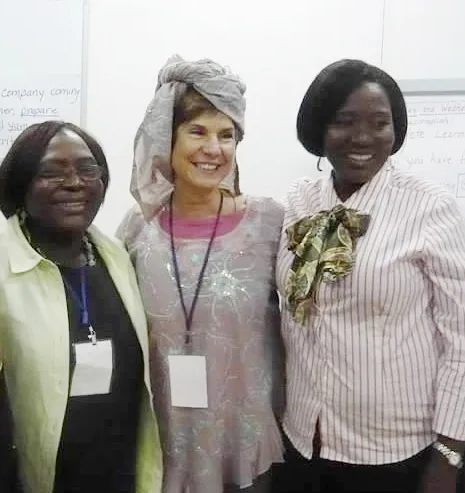
My approach to mentoring is also shaped by earlier work in workforce and systems design. As a certified DACUM facilitator, I have led occupational analyses with educators, employers, and government agencies to clarify professional roles, competencies, and workforce needs.
These collaborations have taken place both in the United States and internationally, including projects in Mongolia, Kenya, Barbados, Jamaica, and Nigeria. Working across these contexts deepened my understanding of how professional development, leadership formation, and workforce systems intersect.
That systems perspective continues to inform my mentoring work today. Rather than focusing only on individual mentoring relationships, I work with institutions to design the structures that support leadership development, faculty growth, and organizational resilience.
Current Work
Today my work centers on helping healthcare education institutions design mentoring systems that support faculty and student development, leadership pathways, and long-term institutional resilience.
Through Leading Transformational Mentoring™, advisory partnerships, and speaking engagements, I collaborate with leaders who recognize that mentoring is not simply a program to implement; it is a structural element of healthy institutional culture.
Begin the Conversation
Every workforce ecosystem is shaped by unique conditions, stakeholder dynamics, and strategic objectives. A thoughtful conversation allows us to assess scope, alignment, and the most appropriate pathway forward.